
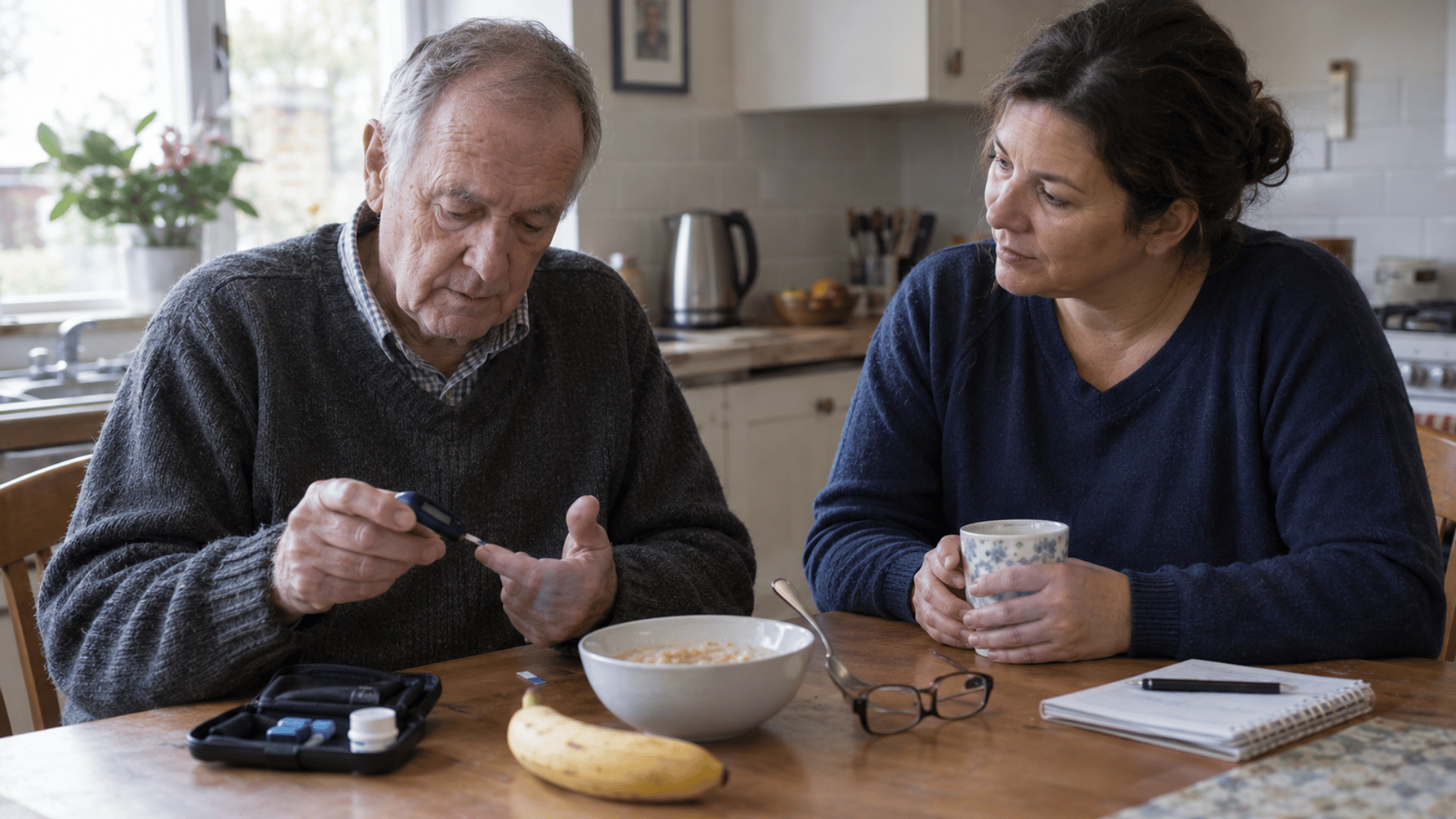
Diabetes is one of those conditions that many families live with quietly.
There are the tablets, the injections, the finger-prick tests, the foot checks and the endless question of what’s okay to eat. Add to that the usual challenges of getting older, and managing diabetes at home can become a lot to juggle.
On World Diabetes Day, 14 November, here’s a practical look at how families and carers can support an older person with diabetes, safely and with dignity.
A Quick Word on Diabetes
Diabetes is a long-term condition in which the body doesn’t make enough insulin, or can’t use it properly, so blood sugar (glucose) levels become too high. Many older adults have type 2 diabetes, and some have type 1. Treatment varies and may include diet changes, tablets, injections or insulin.
Every person’s plan is different, and it should come from their GP, diabetes nurse or specialist team. Nothing in this article replaces that advice.
The Daily Routine Matters
Diabetes works best with a steady rhythm.
- Medication or insulin: taken at the right times, in the right doses, exactly as prescribed. Never change or stop diabetes medication without advice from a healthcare professional.
- Monitoring: some people check their blood glucose at home. If so, they should know when to check, what their target range is and when to ask for advice.
- Meals: regular meals, not skipped ones, especially if taking certain medicines or insulin. A dietitian or diabetes nurse can advise on what suits the individual.
- Fluids: staying hydrated helps, particularly in hot weather or when someone is unwell.
- Activity: gentle, regular movement within a person’s abilities can support health.
A written routine, kept somewhere visible, helps everyone stay on track. If medication feels overwhelming, our guide to keeping a loved one safe at home has practical ideas.
Low Blood Sugar (Hypo): Know the Signs
Low blood sugar, or a “hypo”, can happen if someone takes certain diabetes medicines, misses or delays a meal, or is more active than usual. It can come on quickly.
Signs can include:
- Feeling shaky, sweaty or dizzy
- Hunger
- Looking pale
- Headache
- Feeling anxious, irritable or confused
- Trouble concentrating or speaking
In older adults, hypos can also look like sudden confusion, unsteadiness or unusual behaviour, and they can increase the risk of falls.
Everyone with diabetes at risk of hypos should have a plan from their healthcare team about what to do if blood sugar drops. Follow that plan. If someone is very drowsy, can’t swallow safely, has a seizure or loses consciousness, call 999. Don’t give food or drink to someone who is unconscious or can’t swallow safely.
High Blood Sugar: Don’t Ignore It
High blood sugar can build up more slowly. Signs may include:
- Increased thirst
- Passing urine more often
- Tiredness
- Blurred vision
- Dry mouth
- More frequent infections
If someone has these signs, or consistently high readings, contact their GP or diabetes team. If they’re very unwell, vomiting, breathing rapidly or drowsy, seek urgent help.
Foot Care: Small Things Can Become Big Problems
Diabetes can affect feeling and circulation in the feet, so a small blister or cut can go unnoticed and become serious.
Helpful habits:
- Check both feet every day, including between the toes and the heels, or have someone help
- Wear well-fitting shoes and socks, and avoid walking barefoot, even indoors
- Wash feet gently and dry them carefully, especially between the toes
- Don’t cut corns or hard skin yourself
- Keep regular foot checks with a healthcare professional, as arranged by the GP or diabetes service
Contact a GP, podiatrist or district nurse promptly if you notice a blister, cut, sore, swelling, colour change or any new pain or numbness. Don’t wait to see whether it improves.
Eyes, Kidneys and Other Check-Ups
People with diabetes are usually invited for regular reviews, including diabetic eye screening and checks on kidney function, blood pressure and cholesterol. These appointments are easy to miss, especially if someone is unwell or has memory problems. A calendar reminder or a family member helping to book and attend can make a real difference.
When Someone Is Unwell
Illness can make blood sugar harder to manage, and people with diabetes may need specific advice, sometimes called “sick day rules”. If someone with diabetes has a fever, vomiting, diarrhoea or isn’t eating and drinking normally, contact their GP, diabetes nurse or NHS 111 for advice the same day. Don’t stop medication unless a healthcare professional tells you to.
Diabetes, Dementia and Frailty
When someone also lives with dementia or frailty, managing diabetes becomes more complicated. They may forget to eat, take medication twice or not recognise the signs of a hypo. Their treatment goals may also change, with an emphasis on avoiding hypos and keeping them comfortable and safe.
If you’re caring for someone in this situation, ask their GP or diabetes team to review the plan, keeping in mind their overall health and what matters to them. Our dementia care team works closely with families on routines like this.
How Home Care Can Help
Depending on the person’s needs and care plan, home care can support diabetes management by:
- Preparing regular, suitable meals and encouraging fluids
- Prompting or supporting medication in line with the agreed plan
- Checking feet and skin during personal care and reporting changes
- Noticing signs of hypos, high blood sugar or infection and acting on the person’s plan
- Encouraging movement and attending appointments
- Providing reassurance and companionship
Some tasks, such as administering insulin, need appropriate training, competence and a clear care plan, and may involve nursing oversight. For people with more complex needs, nurse-led complex care at home adds clinical oversight.
A Quick Checklist
- Make sure there’s a written medication and monitoring routine
- Know the signs of low and high blood sugar, and what the plan says to do
- Keep regular meals and fluids
- Check feet daily and act quickly on changes
- Keep up with eye, foot and kidney reviews
- Get advice the same day if the person is unwell
- Never change or stop diabetes medication without advice
- Ask for support if the routine is becoming too much
Final Thoughts
Living well with diabetes at home is possible, and it usually comes down to routine, small daily checks and knowing when to ask for help.
If you’re supporting someone, you don’t have to be a clinician. You just need a clear plan, a good relationship with the healthcare team and someone to share the load.
At Kome Care, our nurse-led team provides person-centred home care across London, including support for people living with long-term conditions such as diabetes. If you’d like to talk through what support could help, we’re here.
Talk to our team or book a Nurse-Led Care Review.
This article is for general information and is not medical advice. Always follow the advice of the person’s GP, diabetes nurse or specialist team. If someone is very unwell, unconscious or you suspect a medical emergency, call 999.
