
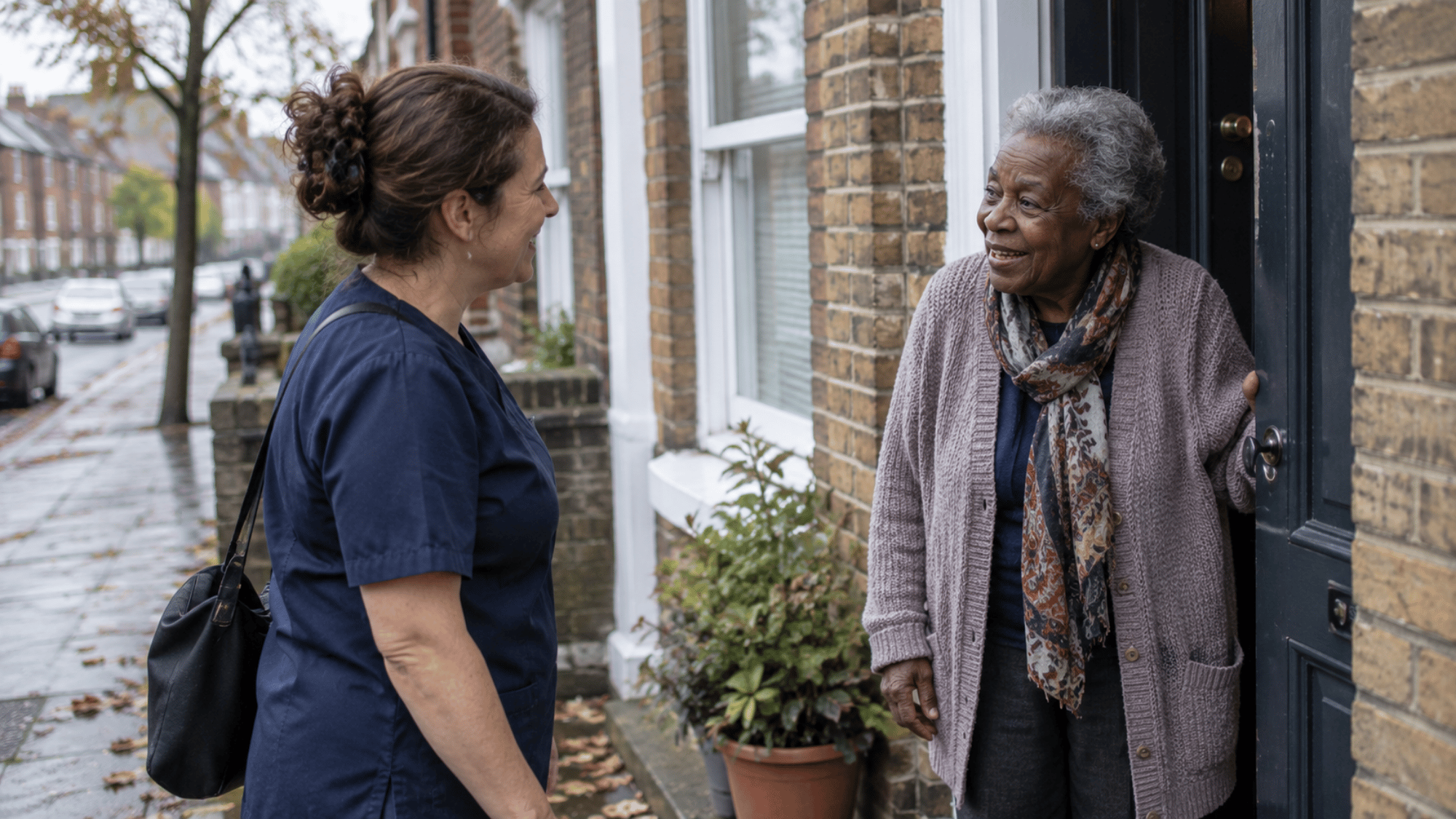
From the busy streets around Elephant and Castle to the quieter corners of Dulwich, Southwark is a borough of many neighbourhoods, and many different experiences of getting care.
If you’re arranging home care for a parent, partner or yourself in Southwark, the process can feel confusing at first. Who do you ask? Will the council pay? How do you know if a provider is right?
This guide walks through the basics, so you can take the first steps with more confidence.
Where Do You Start?
If you or someone you care for may need support, the usual starting point is a needs assessment from Southwark Council’s adult social care team. It looks at what a person can and can’t do day to day, what support is already in place and what difference care could make.
According to the council’s information, there are different routes depending on age and circumstances, and council guidance may first point people to community resources or equipment before considering council-arranged support. The council’s published contact details for older people and adults with physical disabilities have included the number 020 7525 3324, but contact details change, so please check the current information on the Southwark Council website before calling.
You don’t have to wait for the council before talking to a care provider. Many families explore private options at the same time, particularly if care is needed quickly.
Will the Council Help Pay?
If the council agrees you have eligible care needs, it may arrange or contribute to your care. Most adult social care services involve a financial assessment to work out how much, if anything, you contribute.
Key points to know:
- Southwark Council states that most adult social care services are subject to contributions, including personal care in the home and carers’ breaks
- A financial assessment looks at income, savings and capital. In England, the upper capital limit is currently £23,250, though you should check current thresholds
- The council has published a charging team contact for financial assessment forms, listed on its website as 0800 358 0228
- Southwark has a local charging approach called the Fairer Contributions Policy, which has been under review, so it’s worth checking the council’s latest guidance
If you have savings above the limit, you may be asked to arrange and fund care yourself, but you can still ask the council for an assessment and for advice.
After a Hospital Stay
Many families first look for home care when someone is about to leave hospital. People in Southwark are often discharged from large local hospitals such as Guy’s and St Thomas’ and King’s College Hospital, although others may be treated elsewhere.
The council describes short-term support at home after a hospital stay, known as reablement, and says it is available free for up to six weeks. Reablement is designed to help someone regain independence rather than provide long-term care, and what’s offered depends on assessed needs.
If longer-term support is needed after reablement, the council may arrange a further assessment. Families can also arrange care privately, either to start straight away or to sit alongside council support.
It helps to ask the hospital discharge team early:
- What support will be in place when we get home?
- Who is responsible for arranging it, and when will it start?
- What happens when short-term support ends?
- Is the person likely to need a Continuing Healthcare assessment?
Our guide to hospital discharge care explains how rapid-response support can work.
NHS Continuing Healthcare
If someone has significant ongoing health needs, they may be eligible for NHS Continuing Healthcare (CHC), which is arranged and funded by the NHS rather than the council. Southwark is part of the South East London Integrated Care Board area, which makes decisions about local CHC eligibility. CHC isn’t means-tested.
It’s worth asking a GP, hospital team or social worker whether an assessment is appropriate. Our funding guide explains the main routes in more detail.
Direct Payments
If the council funds some or all of your care, you may be able to receive a direct payment instead of the council arranging services for you. This gives you more control over who provides your care and when. You can choose a provider such as Kome Care to deliver it, if that suits you.
Direct payments come with responsibilities, such as managing the money and keeping records, so ask the council what support is available.
Paying for Care Privately
Many people in Southwark arrange and pay for care themselves, either because they’re above the financial limits or because they want more choice and flexibility.
It’s still worth:
- Asking the council for a needs assessment, even if you expect to self-fund
- Checking whether you may be eligible for benefits, such as Attendance Allowance for people over State Pension age
- Asking providers for clear, written quotes
You can see our current starting rates on our care pricing page.
Support for Family Carers
If you’re caring for someone, you may be entitled to a carer’s assessment, which looks at how caring affects your health, work and life. The council may be able to offer support or breaks, and you can also arrange respite care privately. Check the Southwark Council carers’ pages for current information.
Choosing a Home Care Provider in Southwark
With lots of agencies to choose from, here are some things to ask:
- Is the provider registered with the Care Quality Commission, and what does the latest inspection report say, where one has been published?
- Is there clinical or nursing oversight, especially if needs are complex?
- How are carers matched, and how do you handle continuity?
- What support is available out of hours for existing clients?
- Is the pricing transparent, including weekend and bank holiday rates?
- How is the care plan reviewed?
- Will the team genuinely cover your postcode, and can they staff the package sustainably?
Don’t be afraid to ask for a conversation, or an assessment at home, before you decide. Good providers expect questions.
How Kome Care Can Help in Southwark
Kome Care is an independent, nurse-led provider based at Tower Bridge, just across the river from much of Southwark. Our team supports people at home with personal care, dementia care, live-in care, overnight care and complex care at home.
You can read more about our local service on our home care in Southwark page. Coverage depends on your postcode and the care needed, and we’ll tell you honestly whether we can build a safe, sustainable team for your area.
A Quick Checklist
- Ask Southwark Council about a needs assessment
- Ask about a financial assessment if you want to know whether you may be eligible for help with costs
- Ask the hospital team about discharge support and reablement
- Ask whether a CHC assessment might be appropriate
- Check your eligibility for benefits
- Explore a carer’s assessment if you’re a family carer
- Compare providers and ask for written quotes
Final Thoughts
Arranging care can feel like learning a new language, but you don’t have to do it all at once. A phone call to the council, a conversation with a provider and a clear list of questions will take you a long way.
Whatever route you take, the aim is the same: the right support, at the right time, in the place where someone feels most at home.
If you’d like to talk through your options in Southwark, our team is happy to help.
Talk to our team or book a Nurse-Led Care Review.
This article is for general information and is not legal, financial or medical advice. Council contact details, charging policies, financial thresholds and benefit rules can change, so please check current information with Southwark Council, NHS England or an independent adviser.
