
For many people with COPD, the cold weather brings a familiar dread.
The chill in the air, the damp, the winter bugs going around. A cough that used to be a nuisance becomes a worry, and a flight of stairs starts to feel like a mountain.
If you’re supporting someone with chronic obstructive pulmonary disease (COPD) at home, this guide covers what helps, what to watch for and when to get help quickly.
What Is COPD?
COPD is a long-term lung condition that makes it harder to breathe. It includes conditions such as emphysema and chronic bronchitis, and it’s most often linked to smoking or long-term exposure to irritants, though other causes exist.
Common symptoms include:
- Breathlessness, particularly with activity
- A persistent cough, often with phlegm
- Wheezing
- Frequent chest infections
- Feeling tired
COPD usually develops slowly and doesn’t go away, but treatment and everyday habits can help people stay as well and active as possible.
Why Winter Makes It Harder
Cold air can irritate the airways, and winter infections such as colds, flu and chest infections can quickly make symptoms worse. A sudden worsening is often called a flare-up or exacerbation, and it can need prompt medical help.
Our guide to winter safety for older adults covers heating, lighting and other cold-weather basics.
Getting the Basics Right
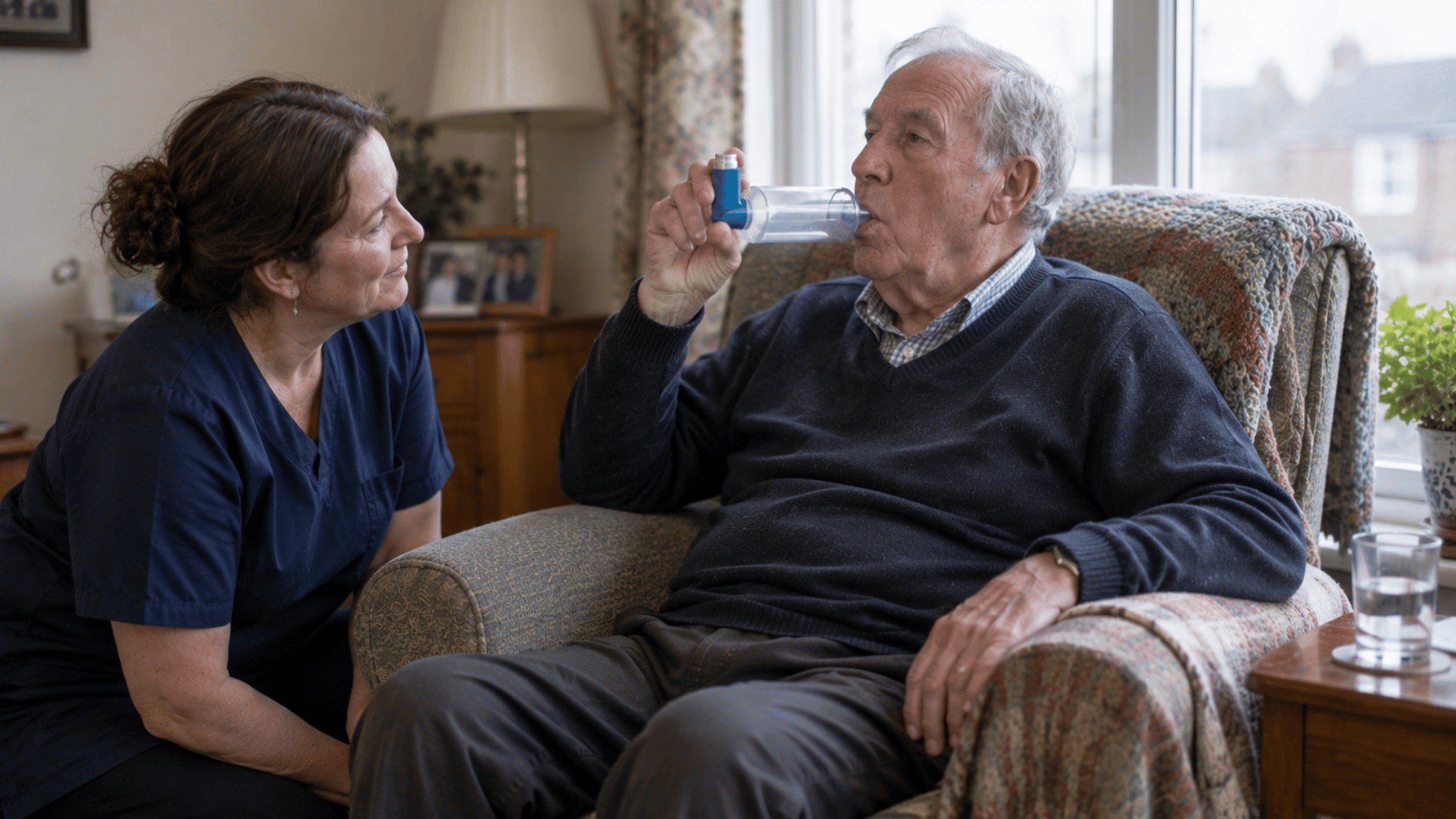
Inhalers and medication. Inhaler technique matters a great deal. Many people don’t get the full dose because of how they use their device. A pharmacist, GP or respiratory nurse can check technique and explain which inhaler is for daily use and which is for relief. Keep a clear, up-to-date medication list, and never stop or change medication without advice.
An agreed plan. Some people have a written COPD self-management plan from their healthcare team, and some have a “rescue pack” to use if symptoms flare. If your relative has one, make sure everyone involved knows where it is and what it says. If they don’t have one, it’s worth asking their GP or respiratory nurse about it.
Vaccinations. Ask the GP or pharmacist which vaccines your relative is eligible for, such as flu, Covid-19 and pneumococcal vaccines. Eligibility and timing change from time to time, so it’s best to check current advice.
Pulmonary rehabilitation. This is a programme of supervised exercise and education that can help people with COPD feel less breathless and more confident. Ask a GP about local availability.
Stopping smoking. If the person still smokes, stopping is one of the most effective things they can do. Support from a GP, pharmacist or local stop-smoking service can make it easier. If oxygen is prescribed, it’s essential to follow fire-safety advice: no smoking and no naked flames near oxygen.
Everyday Ways to Ease Breathlessness
Small adjustments can make daily life more comfortable.
- Pace activities. Break tasks into stages with rests in between, rather than rushing.
- Sit for tasks such as washing, dressing and preparing food where possible.
- Breathing techniques. A physiotherapist or respiratory nurse can teach techniques such as pursed-lip breathing and ways to recover after exertion.
- Find a comfortable position. Many people find leaning slightly forward, with arms supported, helpful when breathless.
- Keep the home comfortably warm and not stuffy. Cold air can trigger symptoms, but a smoky, damp or heavily scented room can too.
- Keep things within reach. Place frequently used items at waist height to reduce bending and stretching.
- Eat little and often if big meals leave the person feeling full and breathless.
Signs of a Flare-Up
Contact the GP, respiratory team or NHS 111 promptly if you notice:
- More breathlessness than usual
- More coughing, or a change in the colour or amount of phlegm
- Fever or feeling generally unwell
- Needing the relief inhaler more often than usual
- New ankle swelling
- Increased drowsiness or confusion
Early action can sometimes prevent a hospital admission, so it’s worth acting on a hunch.
When to Call 999
Call 999 if someone with COPD has:
- Severe breathlessness, or can’t speak in full sentences
- Blue or grey lips or face
- Chest pain
- Marked drowsiness or confusion
- Symptoms that are rapidly getting worse
Don’t wait to see whether it passes.
The Emotional Side
Breathlessness can be frightening, and fear itself can make it feel worse. People with COPD can feel anxious, low or isolated, particularly if they’re no longer able to do things they enjoyed.
It can help to:
- Talk openly about how breathlessness feels
- Practise breathing techniques together when things are calm
- Keep up social contact, even if outings are shorter
- Ask the GP about support for anxiety or low mood if it’s persistent
Support groups, including those run by lung charities, can also be valuable for patients and families.
After a Hospital Stay
A flare-up that needs hospital treatment can leave someone weaker and more tired than before. Before discharge, ask:
- What has changed in treatment and medication?
- What should we do if symptoms return?
- Is a follow-up or rehabilitation referral planned?
- What support will be in place at home?
Our hospital discharge care can help with a safe return home.
How Home Care Can Help
Depending on the person’s needs and care plan, home care can include:
- Help with washing and dressing at a gentle pace, which can be exhausting with COPD
- Meals and drinks, including small, frequent meals
- Prompting or supporting medication and inhaler routines
- Noticing early signs of a flare-up and passing them on quickly
- Companionship and reassurance, which can ease anxiety
- Support with mobility and safety around the home
For people with more complex or changing needs, nurse-led complex care at home provides additional clinical oversight, and personal care can ease daily routines.
A Quick Checklist
- Check inhaler technique with a pharmacist or nurse
- Keep an up-to-date medication list
- Find out whether there’s a COPD plan or rescue pack
- Ask about eligible vaccinations
- Keep the home warm, not stuffy
- Pace activities and rest between tasks
- Know the flare-up signs and when to call 999
- Make sure support is in place after any hospital stay
Final Thoughts
Living with COPD isn’t easy, but with the right routine, early action and support, many people can stay comfortable and active at home, even through the winter.
If you’re caring for someone with COPD, trust your instincts. If something seems different, ask for advice early.
At Kome Care, our nurse-led team provides person-centred home care across London, including support for people living with long-term lung conditions. If you’d like to talk through what could help, we’re here.
Talk to our team or book a Nurse-Led Care Review.
This article is for general information and is not medical advice. Always follow the advice of the person’s GP, respiratory team or pharmacist. If someone is struggling to breathe, call 999.
