
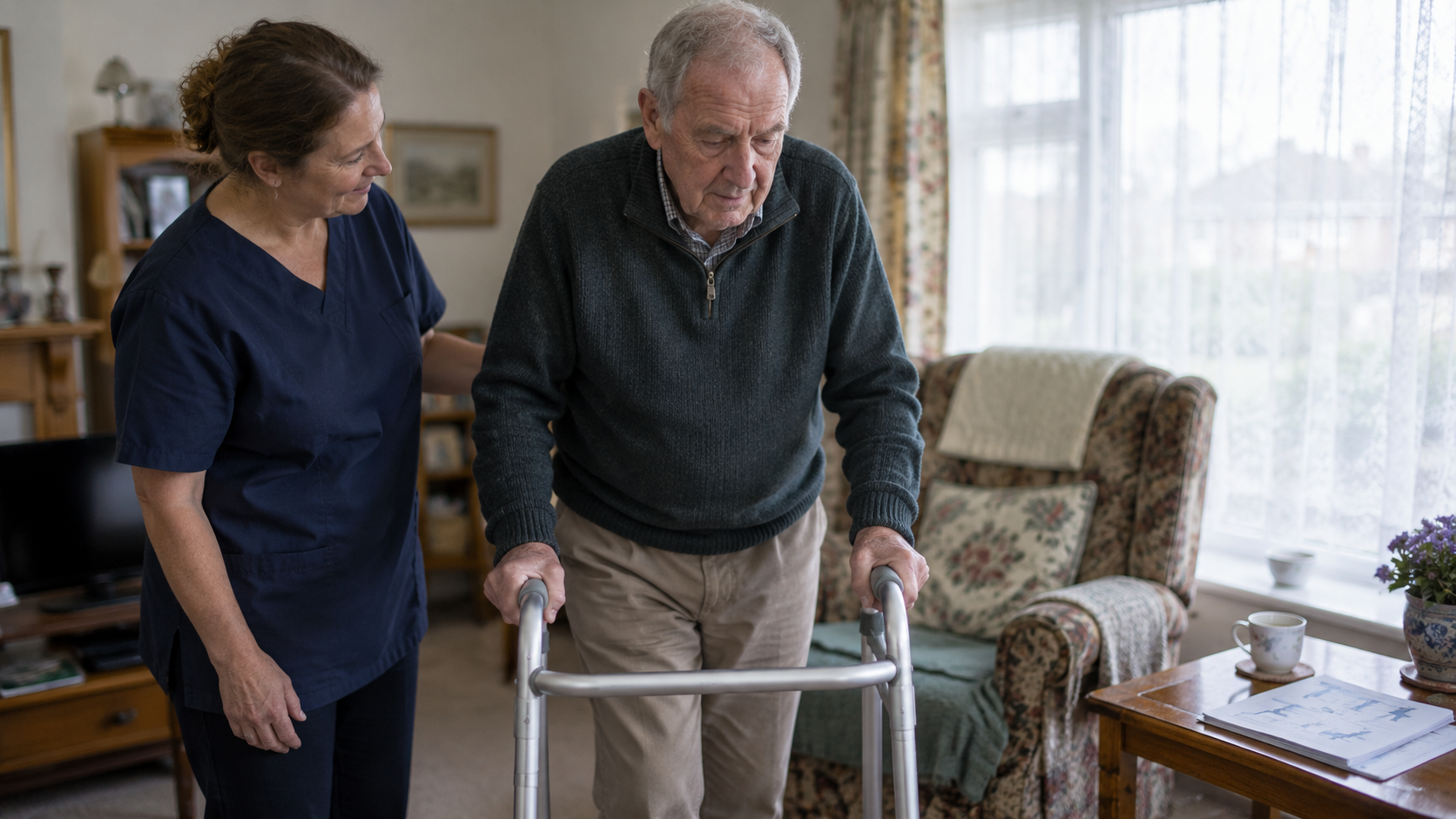
A stroke can happen in minutes. Recovery can take months, sometimes years.
This Thursday, 29 October, is World Stroke Day, a good moment to talk about both: how to recognise a stroke and what support can look like once someone is back at home.
Why Speed Matters
A stroke happens when the blood supply to part of the brain is interrupted. It’s a medical emergency. The sooner someone gets urgent treatment, the better the chance of limiting the damage.
That’s why the message is simple: act FAST.
Recognising the Signs: FAST
The FAST test is a quick way to spot the most common signs of stroke:
- F: Face. Has their face fallen on one side? Can they smile? Is their mouth or eye drooping?
- A: Arms. Can they raise both arms and keep them there? Is there weakness or numbness in one arm?
- S: Speech. Is their speech slurred or confused? Can they understand what you’re saying?
- T: Time. Call 999 immediately if you see any of these signs.
Other symptoms can include sudden loss of vision or blurred vision, sudden confusion, a sudden severe headache, or sudden problems with balance and coordination.
A few important points:
- Don’t wait to see whether it passes. Symptoms that come and go can still be serious, including those of a mini-stroke (transient ischaemic attack or TIA), and need urgent medical assessment.
- Don’t drive them to hospital yourself. Call 999 so paramedics can start care and alert the hospital.
- Note the time symptoms started. Healthcare teams will want to know.
What Happens After a Stroke?
No two strokes are the same. Recovery depends on the type of stroke, the part of the brain affected, the person’s general health and the support they receive.
Someone may experience:
- Weakness or paralysis, often on one side of the body
- Problems with balance and walking
- Difficulty speaking, finding words or understanding others
- Difficulty swallowing
- Fatigue that is out of proportion to what they’ve done
- Problems with vision, memory, concentration or planning
- Changes in mood, such as low mood, anxiety or frustration
- Changes in bladder or bowel control
Some effects improve over time with rehabilitation. Others may be longer-lasting. Families often say the hardest thing is not knowing what to expect, and that’s completely understandable.
Rehabilitation: A Team Effort
Stroke rehabilitation typically involves professionals such as physiotherapists, occupational therapists, speech and language therapists, nurses and doctors. Their recommendations will depend on the person’s needs.
That might include:
- Exercises to rebuild strength, movement and balance
- Strategies for communication
- Advice on safe eating and drinking
- Equipment such as walking aids or adaptations at home
- Support with everyday tasks such as washing, dressing and cooking
Rehabilitation doesn’t always stop at the hospital door. Continuing recommended activities at home, with the right support, can help someone keep building confidence and independence.
Coming Home After a Stroke
The move from hospital to home is a big step.
In hospital, help is on hand. At home, the person and their family become responsible for far more. It’s worth asking before discharge:
- What are the main support needs at home?
- What exercises or activities have therapists recommended?
- Is equipment needed, and has it been arranged?
- Are there changes to how the person eats, drinks or takes medication?
- Who should we contact if something changes?
- Does the home need adaptations to be safe?
It’s also worth thinking about falls, because weakness, balance problems and fatigue can all increase the risk.
How Home Care Can Help
Good home care isn’t about doing everything for someone. It’s about supporting them to do as much as they can, safely.
Depending on the person’s needs and their agreed care plan, support may include:
- Personal care such as washing, dressing and toileting, with dignity and patience
- Encouraging recommended exercises and routines as advised by therapists
- Support with meals and drinks, following any swallowing or dietary advice
- Medication support, including medicines prescribed to help reduce the risk of another stroke
- Helping with communication, including giving time to speak and using strategies recommended by speech and language therapists
- Mobility and fall-prevention support at home
- Companionship and encouragement during good days and difficult ones
- Noticing changes and passing them on to the right people
For people with more complex needs, nursing oversight and clinical care planning can add reassurance.
If you’d like to see what this can look like in practice, you can read how our team supported one client’s recovery in our case study, Supporting Recovery and Independence After a Partial Stroke.
The Emotional Side of Stroke
Stroke doesn’t only affect the body. It can affect confidence, identity and mood.
Someone who was fiercely independent may find themselves relying on others. Someone who loved conversation may struggle with words. Frustration, sadness, anxiety and tiredness are common.
It can help to:
- Give plenty of time and avoid rushing or finishing sentences unless asked
- Celebrate small steps, such as standing a little longer or managing a task independently
- Keep familiar routines and hobbies where possible
- Encourage social contact with friends and family
- Speak to a GP if low mood, anxiety or withdrawal seems to persist
Support groups, including those run by stroke charities, can also be valuable for people who have had a stroke and for their families.
Looking After Family Carers
Stroke can change a family’s life overnight. Family members may suddenly become carers, coordinating appointments, medication, equipment and personal care.
It’s easy to put yourself last. But carers need support too, whether that’s a carer’s assessment, practical help, a break or someone to talk to. Asking for help isn’t a sign of failing. It’s often what makes caring sustainable.
Reducing the Risk of Another Stroke
After a stroke, healthcare professionals often discuss ways to reduce the risk of another one. This may include medication, blood pressure monitoring and lifestyle advice, depending on the person’s circumstances.
It’s important to follow the advice of the GP or specialist team, take medicines as prescribed and attend follow-up appointments. If anything about medication causes concern, ask a healthcare professional rather than stopping or changing it yourself.
A Quick Checklist for World Stroke Day
- Learn the FAST signs and share them with family and friends
- Call 999 immediately if you spot any of them
- Note when symptoms began
- Ask about rehabilitation plans before discharge
- Check the home for falls risks and equipment needs
- Make sure medication changes are clearly understood
- Plan support for the person and for family carers
- Celebrate progress, however small
Final Thoughts
A stroke is frightening, but acting quickly can make a significant difference, and recovery doesn’t end when someone leaves hospital.
With the right clinical guidance, patience, encouragement and practical support, many people can keep working towards greater confidence and independence at home. Every recovery journey is different, and progress isn’t always a straight line.
At Kome Care, our nurse-led team provides person-centred home care across London, including support for people recovering after a stroke. If you’re planning for a loved one’s return home, we’re happy to talk through what support could help.
Talk to our team or book a Nurse-Led Care Review.
This article is for general information and is not medical advice. If you think someone is having a stroke, call 999 immediately. For advice about ongoing health concerns, speak to a GP or other healthcare professional.
